To Italy with Love
A dream trip from Milan to the Amalfi Coast — northern, central and southern Italy.
Milan
Arrival at my first Italian destination
I chose to fly with Ita Airways from Ezeiza to Milan with a layover in Rome, and it was a great choice: impeccable service, tasty meals and free snacks on board. The overnight schedule was ideal — I landed in Milan at 10:30am with no trace of jet lag. I decided to travel with just a backpack and carry-on: with so many hotel and train changes ahead, packing light was essential.
Leaving the airport, I found a direct bus for 5 euros, with wifi on board. The hotel was 5 blocks from Milano Centrale — I always recommend staying near the main transport hub. There's nothing nicer than waking up in Italy and having a coffee with a cornetto, which is basically our medialuna, but filled.
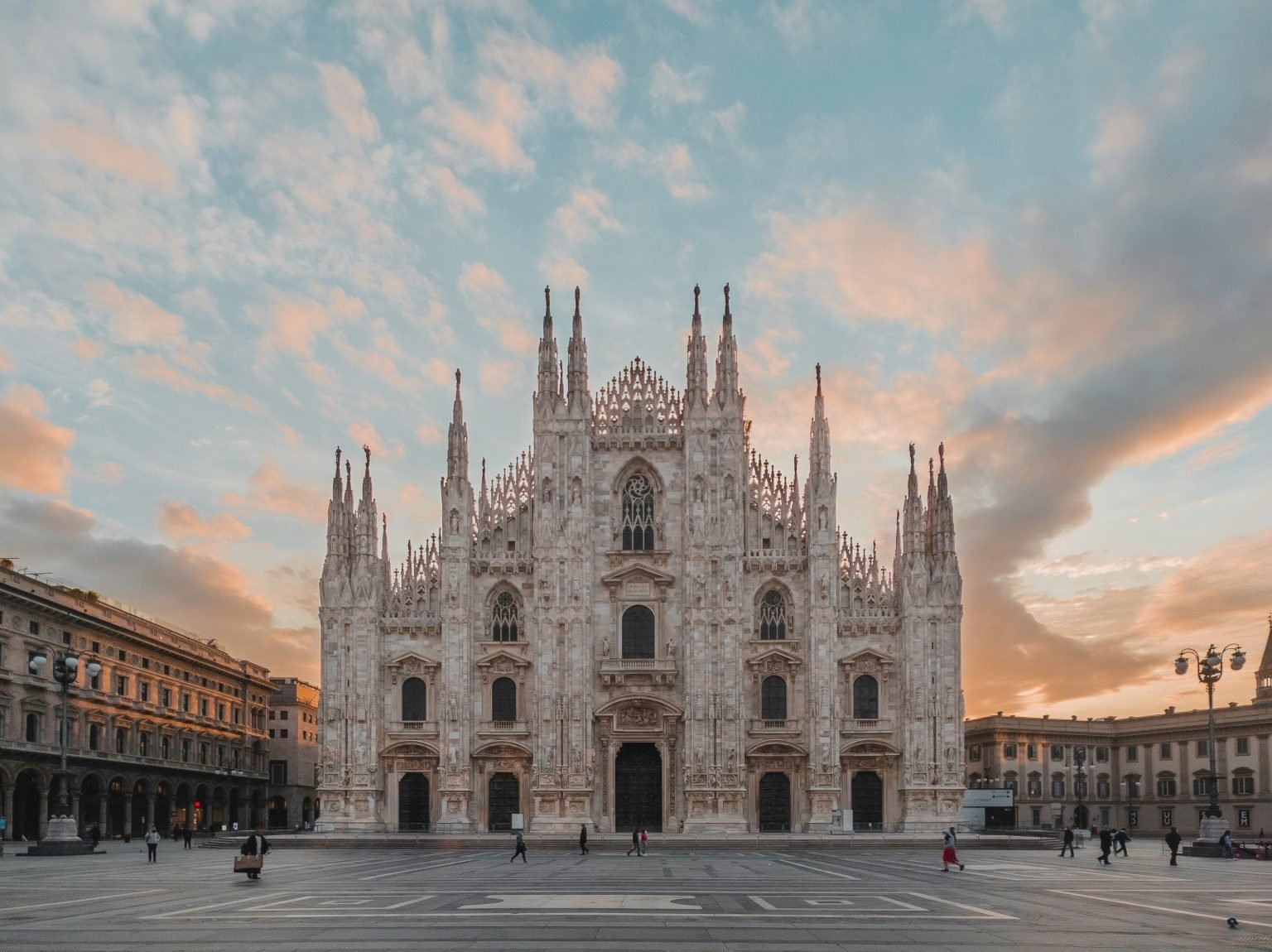
I booked entry to the Duomo in advance through the official website — it's cheaper and you avoid lines. You can have it on your phone, they just scan the QR code. Watch what you wear: no low necklines or shorts, or they'll sell you a plastic cape at the entrance.
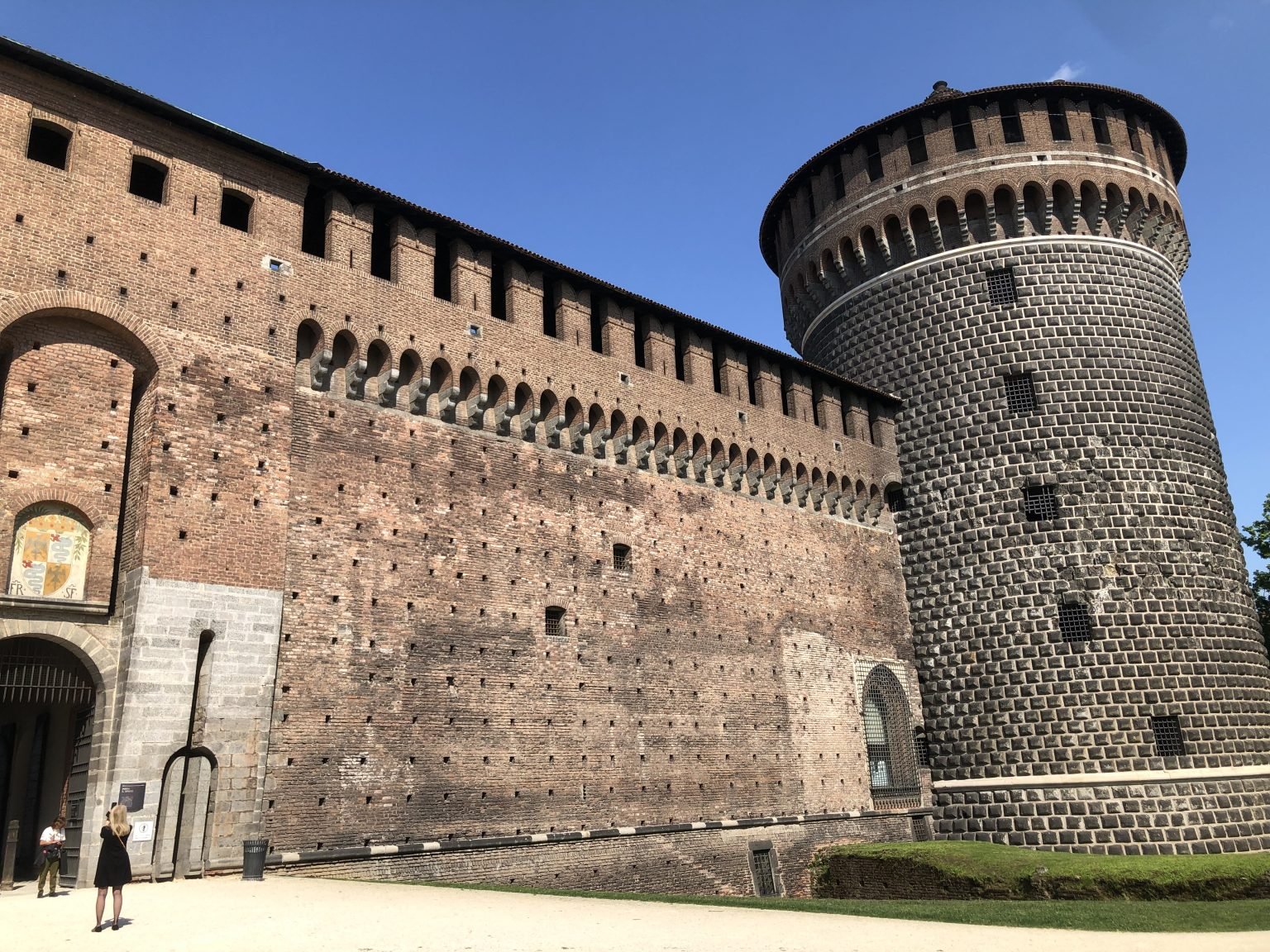
In the afternoon I did a Spanish-speaking walking city tour that started from the garden of Sforza Castle. It was a beautiful experience — our guide knew a lot and you could tell she loved her job. Since that day, every monument has a story behind it for me — it's not just looking at architecture, it's feeling what history left behind.
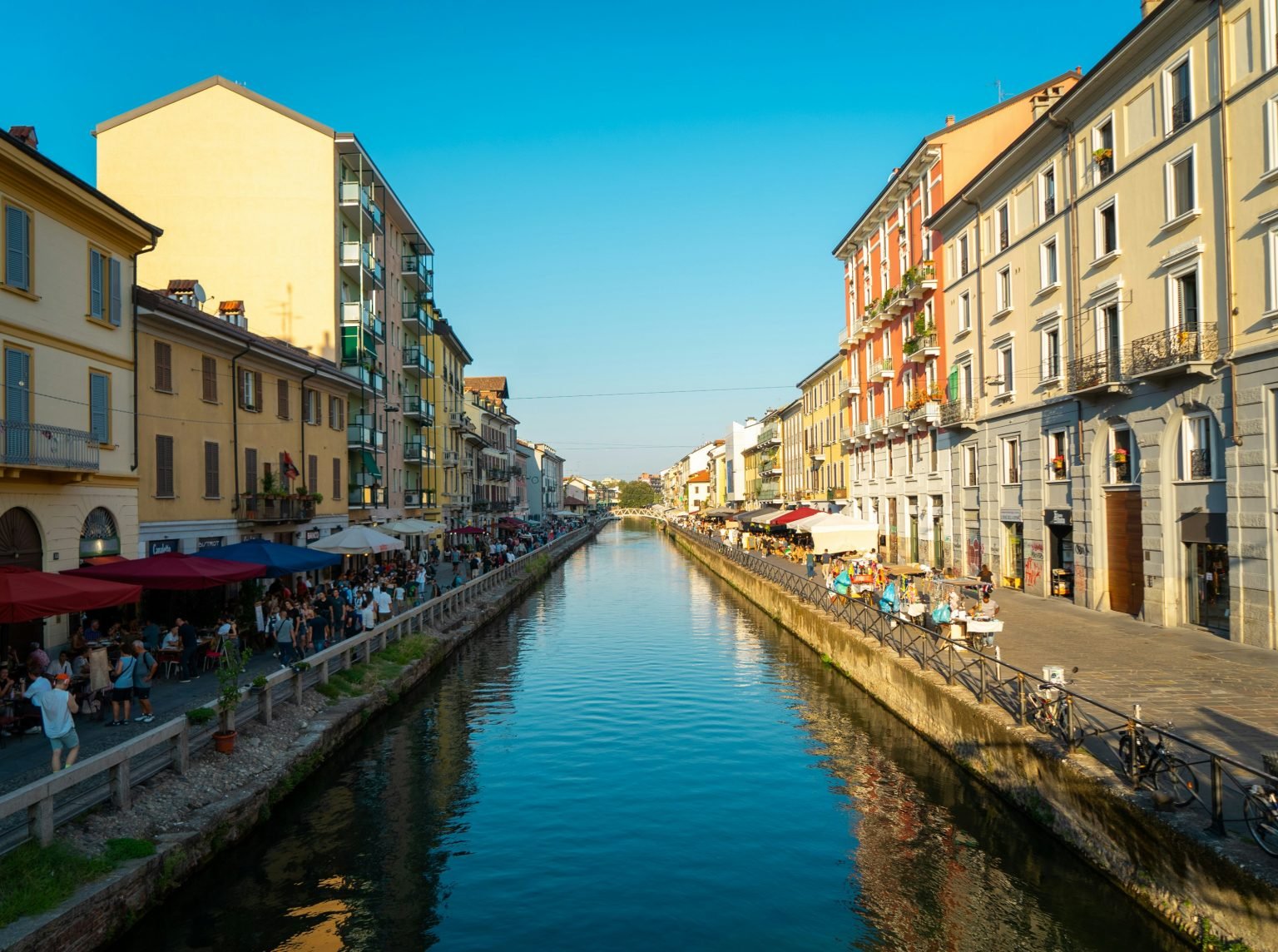
Getting around is easy on the metro: the line colors guide you. Important tip: to get to Navigli, take the M2 line (green) and get off at Porta Genova — make sure to double-check before heading out, especially at night. And remember Italians eat dinner early: after 9pm it's hard to find a kitchen still open.
A fun fact worth knowing: in Piazza Mercanti there's the so-called Whispering Gallery, a real acoustic phenomenon where you can whisper into a hole in the column and be heard clearly on the other side. Medieval merchants and spies used it. Try it, it's amazing.
I went straight to the Pinacoteca di Brera for "The Kiss" by Francesco Hayez, an 1859 painting that's an icon of Italian Romanticism. It shows a couple in a passionate kiss that hides a political message about the Risorgimento. I sat and looked at it for a long while — art is meant to be appreciated.
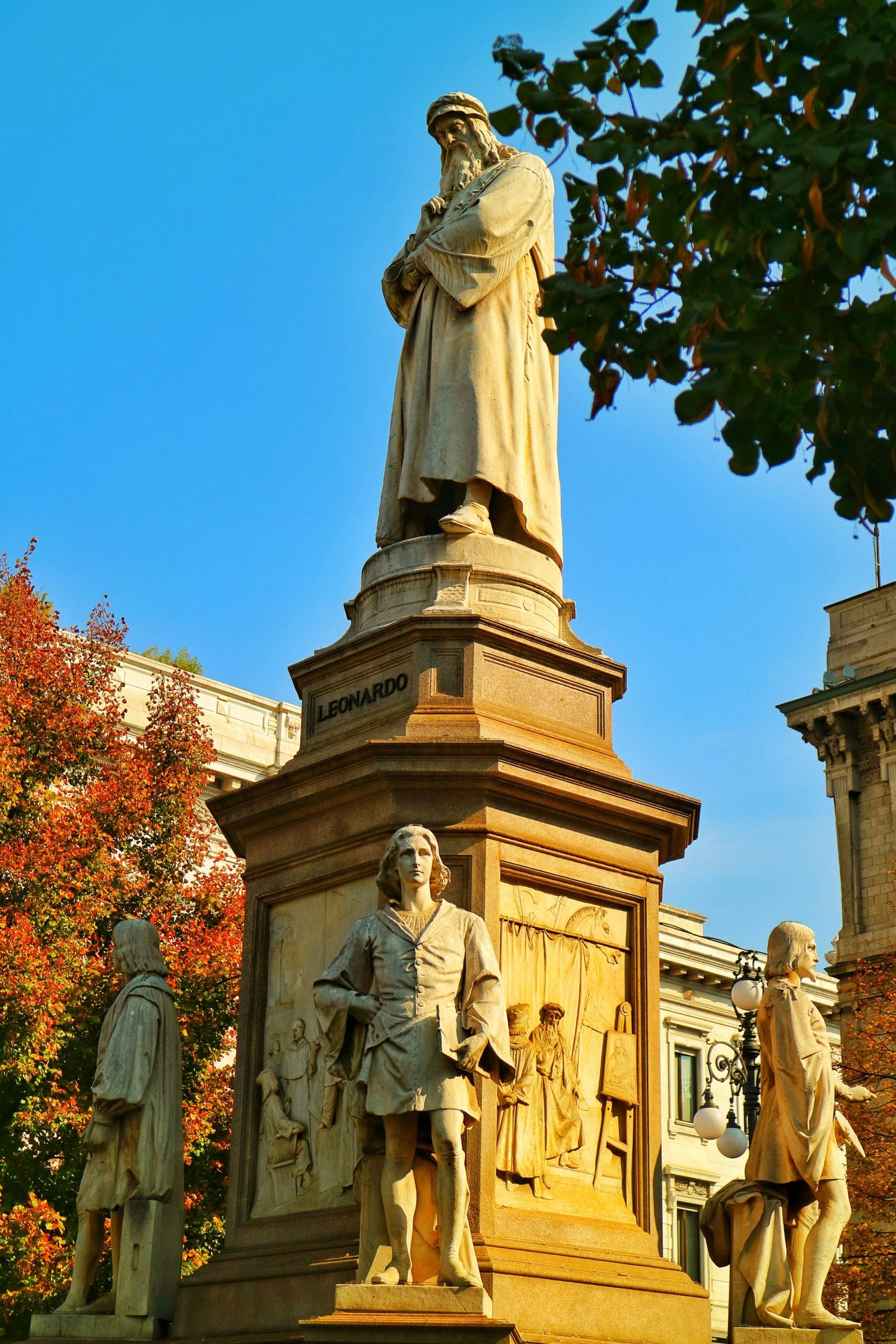
Another must-see: the Cenacolo Vinciano Museum with Da Vinci's Last Supper. The visit lasts only 15 minutes and tickets sell out months in advance — book ahead. If you're a Leonardo fan, the National Museum of Science and Technology is also well worth it.
Practical info · Milan
- Getting thereMalpensa or Linate airports; bus to downtown ~€5, Malpensa Express train ~€13
- Recommended number of days2 to 3 days are enough for the essentials
- Best time to travelApril–June or September–October, mild weather
- Must-seesDuomo + rooftop, Last Supper (book months ahead), Sforza Castle, Navigli at sunset
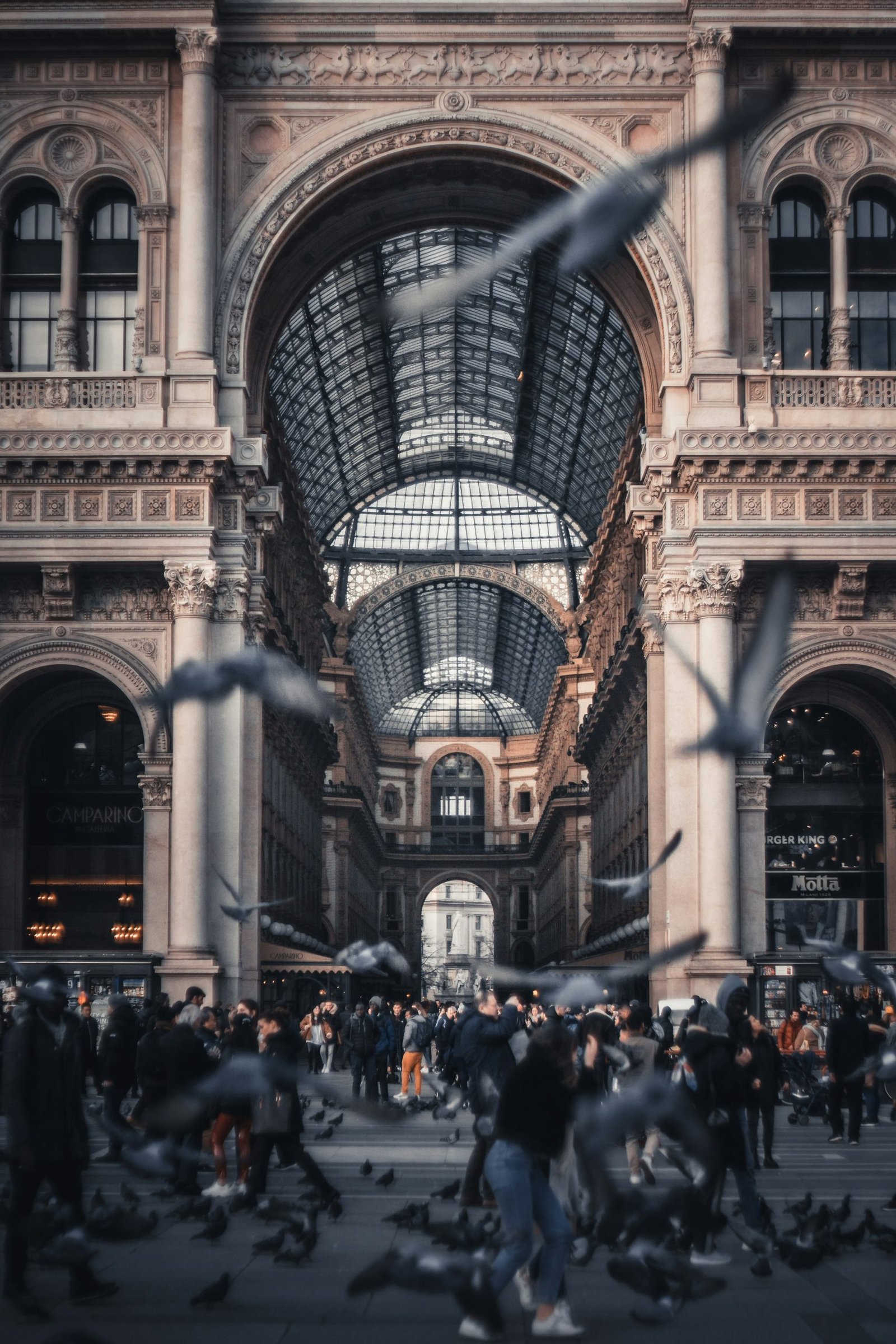
Milan it has much more than fashion and design.
Most travelers pass through Milan on their way elsewhere. A mistake you'll be glad not to make. Beneath the cosmopolitan surface of the Lombard capital lies a medieval, Renaissance and Baroque city that holds some of the world's most important works of art. Italy's largest Gothic Duomo, Leonardo Da Vinci's Last Supper — which only 30 people can see every 15 minutes — and neighborhoods like Brera or Navigli that have a magic no travel guide can capture.
Milan Cathedral and the panoramic rooftop
Built over six centuries, Milan's Duomo is a Gothic cathedral with 135 spires, 3,400 statues and a golden Madonnina that has watched over the city from its highest spire since 1774. Taking the elevator to the rooftop is a perspective-changing experience: suddenly you're walking among the spires, among marble saints, with all of Milan below and the Alps on the horizon on clear days. With a specialized guide who makes every stone tell a story worth hearing.
- Elevator access to the rooftop with no waiting
- Gothic interior: stained glass, crypt and cathedral treasury
- Views of the Alps on clear days
- Guide trained in religious architecture
Leonardo Da Vinci's Last Supper
It's possibly the most sought-after and hardest-to-see work of art in Italy. Leonardo Da Vinci's Last Supper only admits 30 people every 15 minutes, and tickets sell out months in advance. Painted directly onto the refectory wall of the Santa Maria delle Grazie convent between 1495 and 1498, it's not a fresco but an experimental technique Da Vinci invented — one that nearly destroyed it. Seeing it in person, with the right explanation, is understanding why five hundred years later we're still talking about it.
- Guaranteed advance booking included
- Access to the refectory in a small group (max. 30 people)
- Guide specialized in Da Vinci and the Lombard Renaissance
- Visit to the church of Santa Maria delle Grazie
City tour: Sforzesco, Navigli and Brera
Sforza Castle was the seat of Sforza power in the 15th century and today its halls hold an unfinished Pietà by Michelangelo and Leonardo Da Vinci's original drawings for the Sala delle Asse. Then, the Navigli canals that Leonardo himself designed — today Milan's liveliest neighborhood, with bars and restaurants open until dawn. And Brera, the artists' quarter, with its secondhand bookshops, art galleries and the city's finest Pinacoteca. A Milan you won't find in fashion magazines.
- Sforza Castle and Michelangelo's unfinished Pietà
- Navigli canals designed by Da Vinci
- Brera neighborhood and the Pinacoteca
- Vittorio Emanuele II Gallery and the bull mosaic
Excursion to Bergamo's upper city
50 kilometers from Milan, connected by funicular to its modern lower town, Bergamo Alta is one of Italy's best-preserved medieval towns and one of the least crowded with tourists. Its 16th-century Venetian walls are a UNESCO World Heritage Site. Inside, cobblestone streets, a medieval square with a 14th-century baptistery, and breathtaking views of the Alps. It's the kind of place that makes you think, "why doesn't everyone talk about this place?" That's exactly why it's so worth visiting.
- Funicular up to the medieval upper town
- UNESCO World Heritage Venetian walls
- Piazza Vecchia and the 14th-century Baptistery
- Polenta e osei, Bergamo's traditional dish
Lake Como
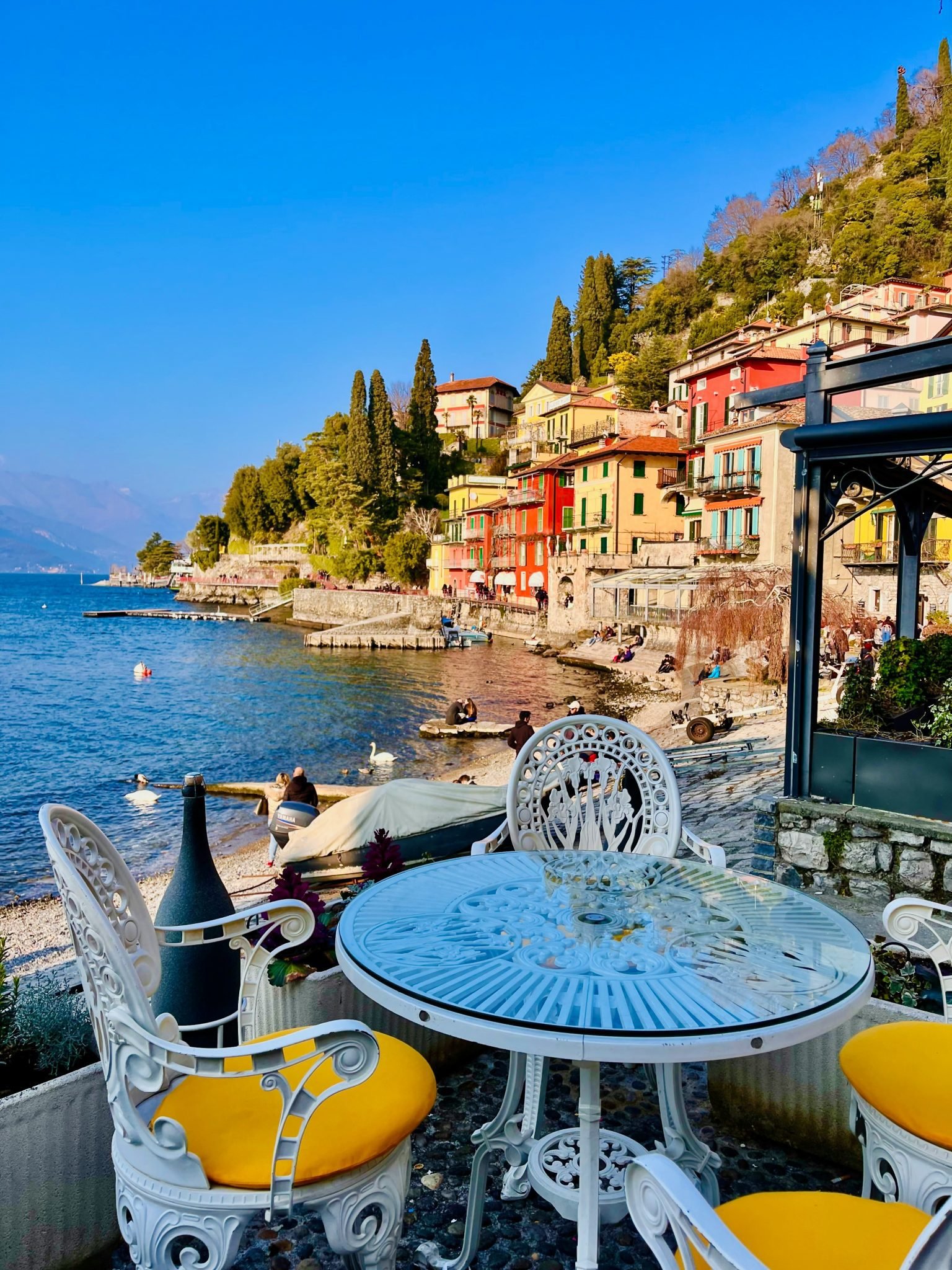
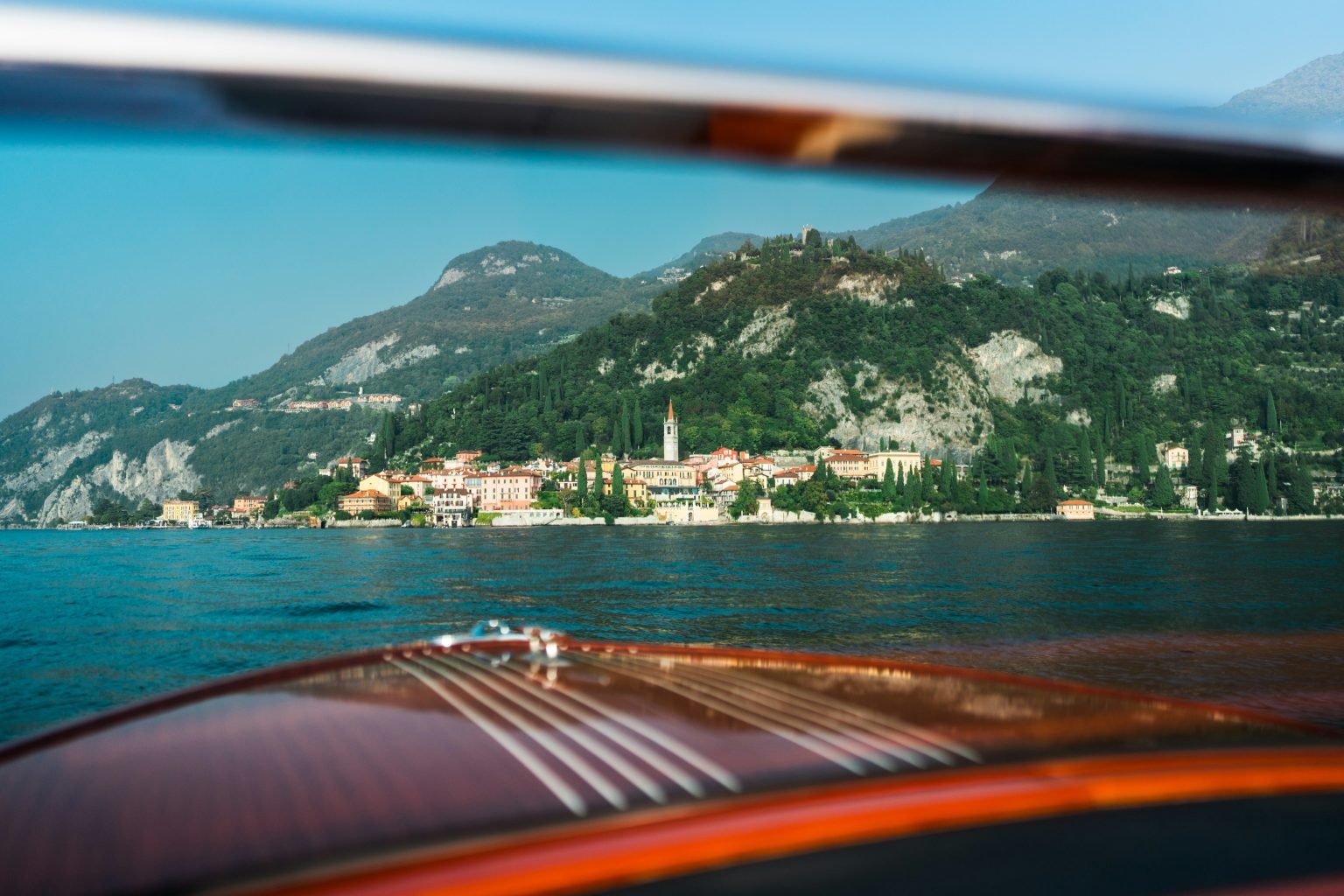
Visiting this place was one of my biggest dreams: I spent months watching Instagram reels, imagining myself walking those colorful streets and tasting Italian delicacies by the water. When I finally got there, it didn't disappoint one bit
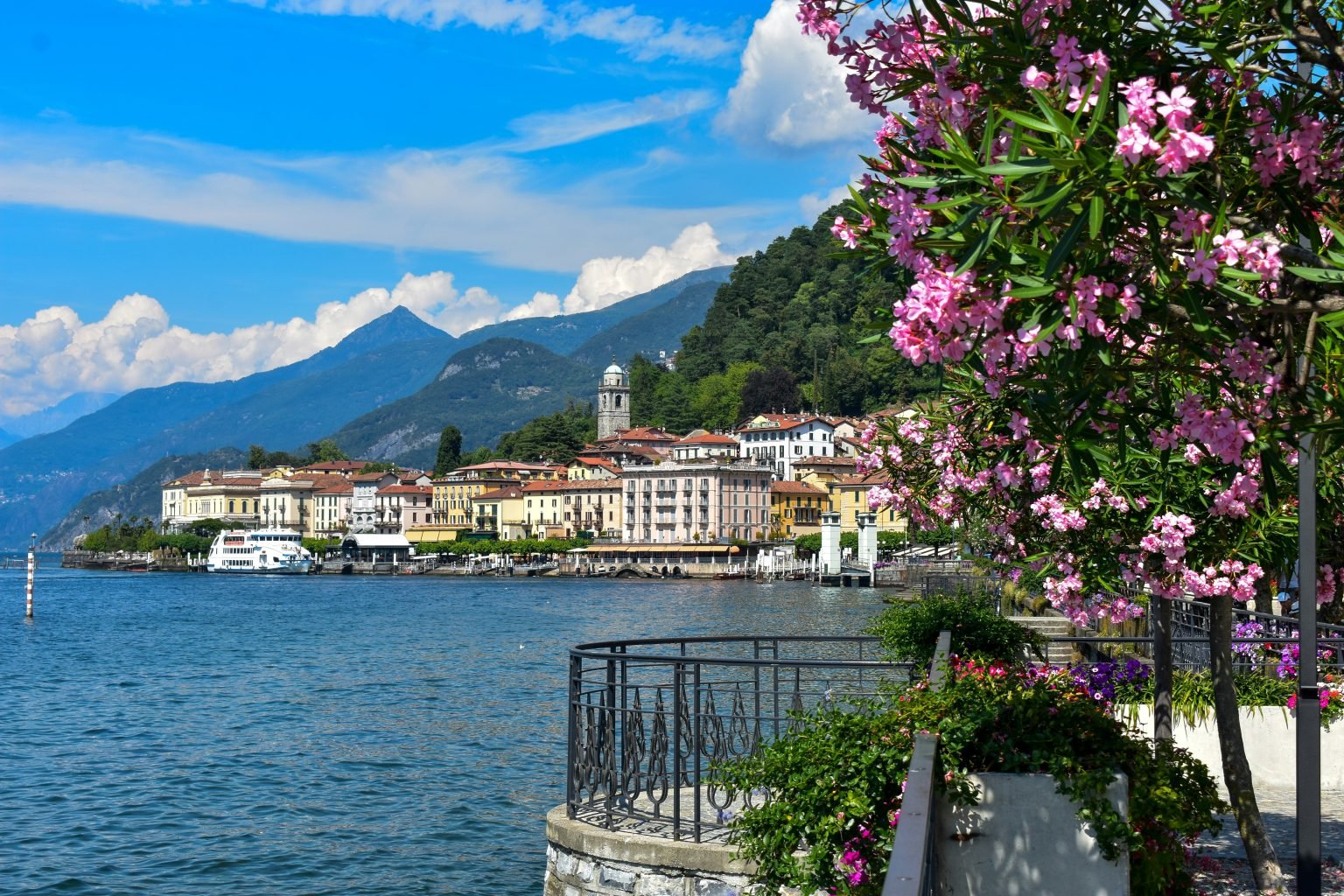
I visited Villa Melzi in Bellagio and Villa Carlotta in Tremezzo, traveling by ferry between each of these villas — impeccably kept, with gardens that invite you to slow down: to relax, to quiet conversation, to that feeling Italians call "dolce far niente" — the pleasure of doing nothing.
I stayed 3 days, but I would have stayed longer. I chose a hostel, Ostello Bello, very close to the station, with a small evening bar that draws both tourists and locals. Breakfast included, plus coffee and snacks available all day at no extra cost — the friendliness and cleanliness were a 10/10.
As you already know I love doing, I took a walking city tour to learn the local secrets, and I picked up quite a bit: in Como's central square stands the monument to Alessandro Volta, the physicist who invented the electric pile (the precursor to the modern battery), and the city is also known for its Gothic cathedral and the funicular that climbs from Como to Brunate.
There's plenty to see, and plenty of local food to enjoy — and why not, an Aperol Spritz with lake views, watching the swans go by.
Recommendations
Take the bus from Lake Como to reach the area's other attractions: you'll get a nice view along the way. Leaving early saves you from the crowd in the ferry line, since there's only one company (Navigazione Laghi) and you need to watch the schedules. If you board from another port — Tremezzo or Menaggio, for example — it'll be easier to get on.
Practical info · Lake Como
- Getting thereTrain from Milan to Como San Giovanni, about 40 minutes
- Recommended number of days2 to 3 days to explore several villages at a relaxed pace
- Best time to travelMay to September, ideal for boating and enjoying the weather
- Must-seesBellagio, Villa Carlotta, ferry between villages, sunset Aperol by the water
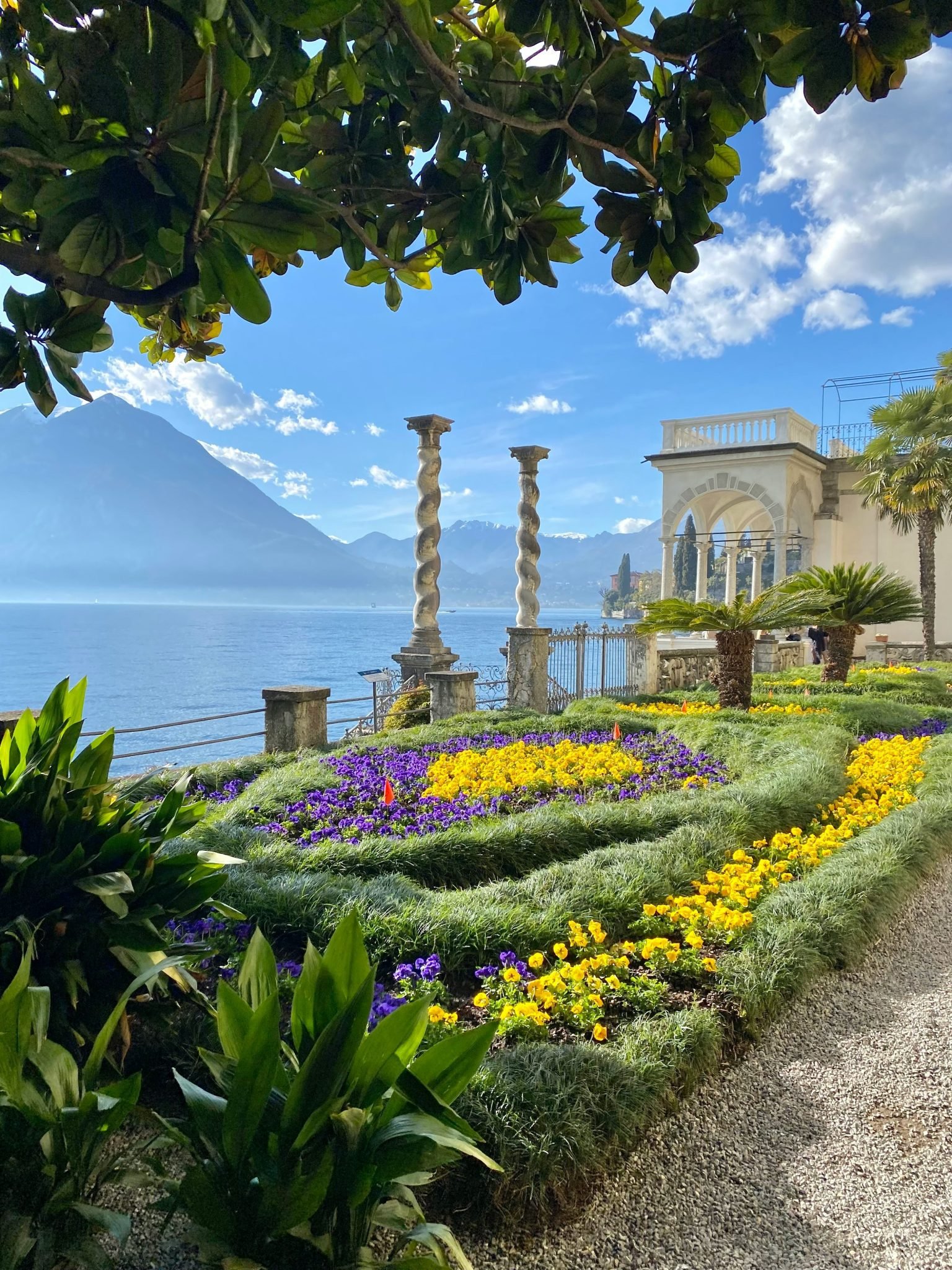
The Lake Como: where the Alps gaze at their own reflection
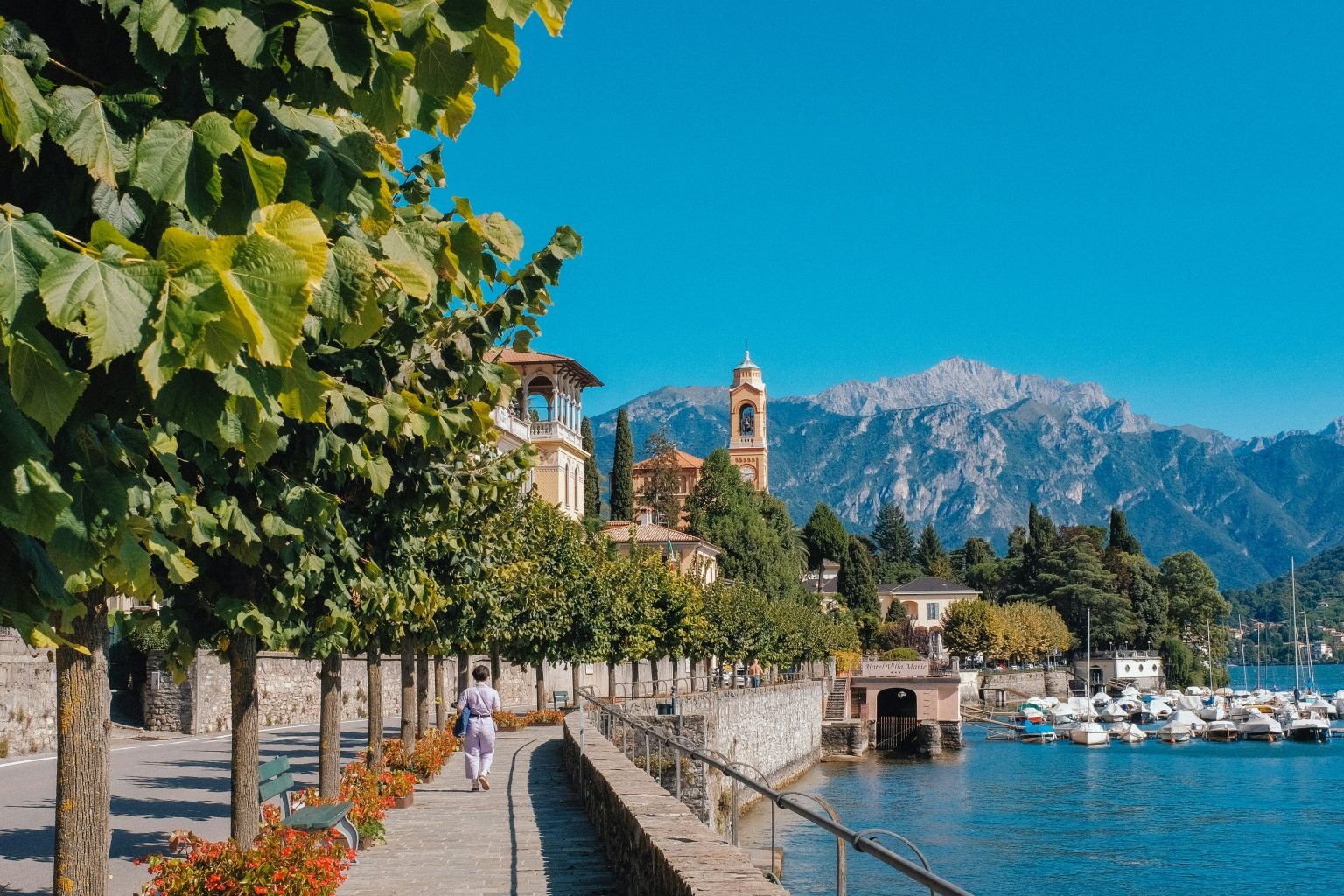
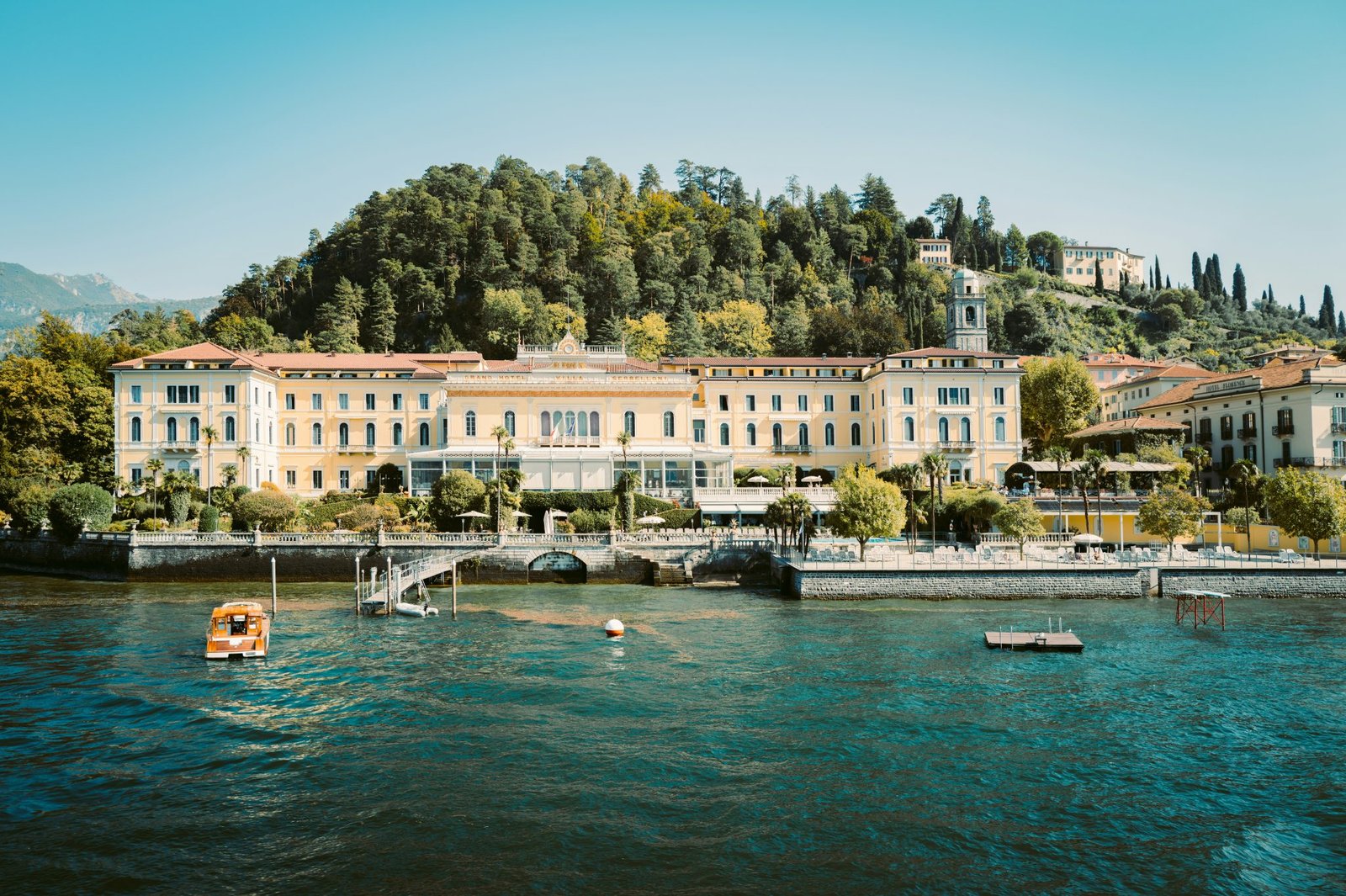
Lake Como has something the other great Italian lakes don't: a quiet, almost understated elegance that seduces without showing off. Aristocratic villas peeking through the greenery, villages that seem to float on the water, gardens of azaleas and wisteria, snow-capped mountains in the background... It's the kind of landscape that makes people who visit once start planning how to come back. Every excursion here is a different postcard from the same paradise.
Bellagio, Varenna and Menaggio by ferry
Bellagio is known as "the pearl of the lake," and arriving by water you fully understand the nickname. Its stepped cobblestone alleys, bougainvillea and lakeside gelaterias have a magic that can't be manufactured. Varenna, on the other side of the lake, is smaller and more intimate, with colorful houses at the water's edge and a botanical garden with the kind of views you'd want as your screensaver for life. Menaggio, the liveliest, with its waterfront promenade and lake trout restaurants. Three villages, three worlds, one perfect day.
- Ferry between the lake's three most beautiful villages
- Bellagio: the "pearl of the lake" with its historic alleys
- Varenna and its botanical garden with unique views
- Free time to have lunch by the water
Villa Carlotta and Villa del Balbianello
Villa del Balbianello is one of the most photographed properties in the world and was also a filming location for Star Wars: Episode II and James Bond's Casino Royale. Its lakeside terrace at sunset is downright surreal. Villa Carlotta, a few kilometers away by boat, holds one of Italy's most important collections of neoclassical sculpture — including originals by Canova — surrounded by azalea and rhododendron gardens that burst into an unmatched explosion of color in spring.
- Villa del Balbianello: film location and legendary gardens
- Villa Carlotta: Canova sculptures and botanical gardens
- Private boat transfer between the villas
- Guide specialized in the lake's art and architecture
Como, Lugano and the Swiss Alps
From Lake Como to Switzerland is less than half an hour by train, and the contrast is fascinating: from Italian lemon trees to Swiss mountains with snow-capped peaks and immaculate watchmaking towns. Lugano, in the Swiss canton of Ticino, is a city with an Italian soul and Swiss efficiency, combining lakeside charm with Alpine views. The excursion includes the funicular up Monte San Salvatore to take in the whole region at your feet. Two countries, one day, memories for a lifetime.
- City of Como and its cathedral with a medieval façade
- Border crossing to Lugano, Switzerland
- Funicular to Monte San Salvatore with Alpine views
- Free time to explore downtown Lugano
Private sunset cruise
Some moments aren't planned, they're created. A private boat on the lake at sunset, a Campari Spritz with the spray of the water, the sun tinting the mountains orange and pink as the villas light up along the shore. This isn't just a boat ride: it's the kind of experience that brings people back to Lake Como year after year. The lake to yourself, no schedules, no crowds. Just the water, the mountains and that magic hour Italians call the "ora d'oro."
- Private boat with local captain
- Italian aperitivo served on board
- Cruise past the lake's most iconic villas
- Sunset over the Alpine mountains, seen from the water
Verona
I got to this beautiful city by train from the Lake Como station, with two connections: Como Camerlata and then Milano Centrale to Verona. At first I wasn't sure the timing would work out, but I downloaded the Omio app and everything went smoothly — Italian trains are very punctual and it's easy to find your way around each station.
It was about a 15-minute walk from the station to the hotel, since downtown is very well located. That same afternoon I had a city walking tour booked.
The tour in the rain and the Verona Arena
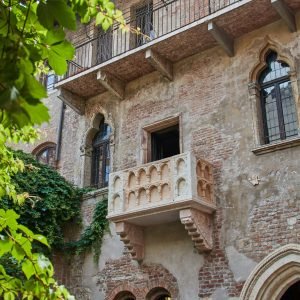
In Piazza San Nicolò our guide was waiting for us with a colorful umbrella. It rained through almost the whole tour, but that gave a nostalgic, special tone to every corner. The stories she told us were fascinating, though it was a shame we couldn't visit Juliet's House, which was closed for renovations.
That night, after the tour ended, the Verona Arena hosted a Jovanotti concert — a very popular act in Italy. I listened from outside while having gelato, and the night was simply perfect.
Excursion to Lake Garda from Verona
The next day I set off from Verona Porta Nuova station toward Lake Garda, getting off at Desenzano del Garda–Sirmione. The regional train takes about 25 minutes.
From the station you can take a bus to central Sirmione, or do what I did: walk along Via Dante, a street lined with picturesque little houses, reaching the harbor in about 10 to 15 blocks. There's also the option of walking down Viale Marconi, the main street, to Desenzano's marina, where boats leave for Sirmione. Along the way, depending on the season, you might see gardens in bloom and even nesting swans.
How to get around the lake
Once you're in the area, you have several options. The most intimate is a small boat with room for up to 6 people to see Sirmione Castle from the water without stepping ashore. You can also book an excursion that includes the boat trip and castle entry, or do it on your own with the Navigazione Laghi ferry — the same company that operates on Lake Como.
The ferry website can be a bit confusing, so my recommendation is to buy the ticket directly on the day you're sailing. It was quick, easy and hassle-free: they give you a timetable and you get about an hour at each stop before the next ferry.
I visited the villages of Sirmione, Lazise, Cisano, Bardolino and Garda between 10 am and 6 pm. If you have more time or are staying in the area, it's worth going as far as Limone, one of the farthest but also one of the prettiest.
Practical info · Verona
- Getting thereTrain from Milan or Venice to Verona Porta Nuova
- Recommended number of days1 to 2 days, including the Lake Garda excursion
- Best time to travelSummer (June–August) if you're interested in the Opera Festival at the Arena
- Must-seesVerona Arena, Juliet's House, a day trip to Lake Garda
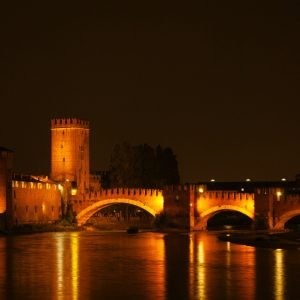
Discover Verona like you've never imagined it
Verona isn't just the city of Romeo and Juliet. It's one of the best-preserved gems of the Roman Empire, a city that blends centuries of history with vibrant cultural life, top-tier food and breathtaking scenery. Every excursion is designed to give you something no photo can capture.
Verona Arena and the historic city
Imagine standing in the center of the world's largest Roman amphitheater after the Colosseum and hearing the echo of two thousand years of history. The Verona Arena isn't just a monument: it's a living stage where one of the world's most important opera festivals is held every summer. With a Spanish-speaking guide, you'll also explore Piazza Bra, the medieval center and the Roman arches scattered across every corner of this extraordinary city.
- Priority access with no waiting
- Spanish-speaking guide with deep historical knowledge
- Tour of Piazza Bra and the Arco dei Gavi
- Local food tips included
Juliet's House and the medieval center
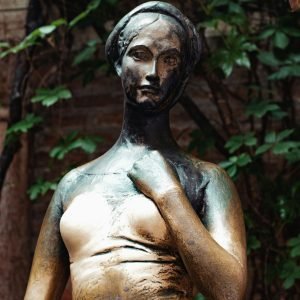
Does Juliet's balcony really exist? What's behind the myth? Our guide takes you through the cobblestone alleys of the World Heritage historic center, revealing the secrets that Shakespeare turned into legend. From Juliet's House to her tomb, passing medieval churches and market squares where Veronese people live their everyday lives, this tour blends romance, history and the magic of walking through a city that looks like a movie set.
- UNESCO World Heritage historic center since 2000
- The real history behind the Shakespearean myth
- Medieval churches and Renaissance art
- Small groups for an intimate experience
Excursion to Lake Garda
Just 30 kilometers from Verona lies Italy's largest lake, a paradise of turquoise waters surrounded by Alpine mountains, lemon trees in bloom and villages that look straight out of a postcard. The star stop is Sirmione, a medieval peninsula with natural thermal springs and a castle jutting into the water. The boat ride across the lake rounds off one of those days you'll remember for the rest of your life.
- Stop in Sirmione and its medieval castle
- Boat ride across Italy's largest lake
- Views of the Alps from the shore
- Free time for lunch by the water
Valpolicella wine tasting
The hills around Verona produce some of the world's most renowned wines: Amarone, Ripasso and Soave were born here. This experience takes you straight to family-run vineyards where you'll learn about the winemaking process, walk among the vines, and sit down to taste labels you won't easily find outside the region. Paired with local cured meats, cheeses, and the Veneto countryside at sunset.
- Visit to a century-old family winery
- Tasting of Amarone, Ripasso and Soave
- Pairing with regional specialties
- Option to buy directly from the producer
Venice
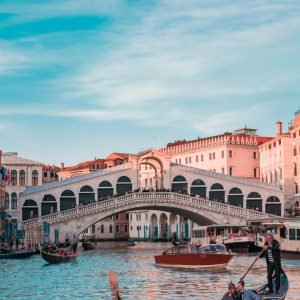
The most magical city I visited: walking through Venice is like being inside a painting. A maze of streets showing off a rich past and a present full of art, with Gothic, Renaissance and Byzantine façades whose balconies seem to "hang" over the water. The stone arches that span the canals — like the Rialto, or the ones around St. Mark's Square — are the star of every corner.
It's built on an archipelago of 118 small islands within the Venice Lagoon, in the Adriatic Sea, between the mouths of the Po and Piave rivers. That canal-city condition, with no cars or bicycles, makes it unique in Italy and in the world.
One afternoon I went to a supermarket in the Cannaregio neighborhood, very close to where I was staying, and bought a beer to sit by the canal and watch the sunset with some cicchetti and suppli (a typical Italian bite: a small ball of rice cooked in meat broth, mixed with egg, coated in breadcrumbs and fried). To my surprise, I wasn't the only one — half the neighborhood was doing exactly the same thing. Good food, a calm moment and a good wine have everything you need to recharge on vacation.
As far as actual excursions go, I only did a walking city tour and a classical music concert at the Santa Maria della Pietà church: Vivaldi's Four Seasons, performed in the very church where he taught and composed, designed to maximize the acoustics for his own works.
Practical info · Venice
- Getting thereTrain to Venezia Santa Lucia, or flight to Marco Polo Airport + vaporetto
- Recommended number of days2 to 3 days to explore downtown and the islands
- Best time to travelSpring or fall; avoid November due to the acqua alta phenomenon
- Must-seesSt. Mark's, a sunset gondola ride, Murano and Burano, a concert at the Pietà
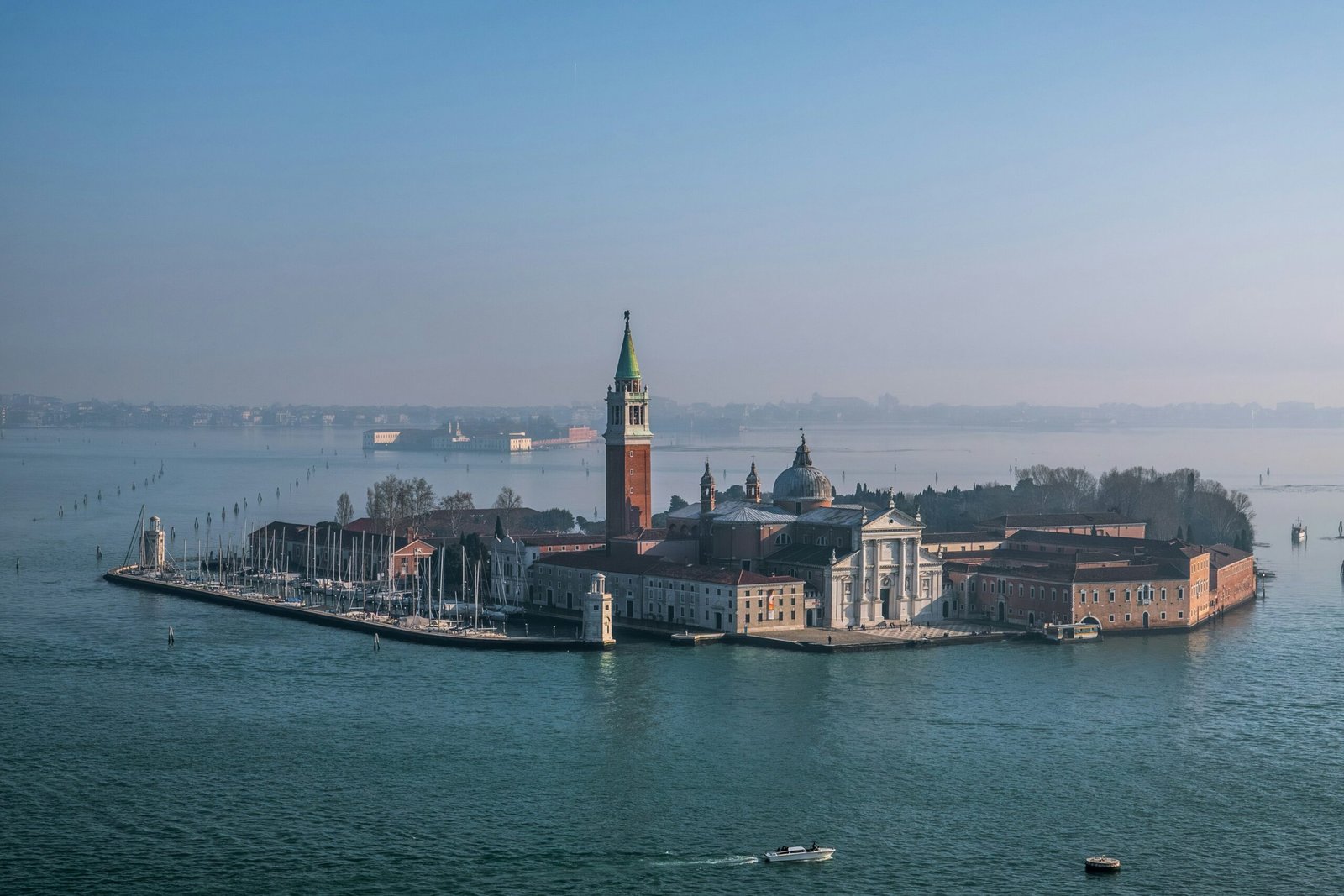
Venice: the city that shouldn't exist and yet is perfect
Venice is the only city in the world built on water, and that physical impossibility is felt in every step. Canals instead of streets, bridges instead of corners, the strange silence of a car-free city, the smell of the sea slipping between 15th-century palaces. You don't just wander Venice, you decode it. And there's a huge difference between seeing it in two hours with a map and understanding it with someone who knows its layers: the power of the Most Serene Republic, trade with the East, Murano glass, Burano lace, Carnival masks. Every excursion here is a doorway into a world unlike any other.
St. Mark's Basilica and the Doge's Palace
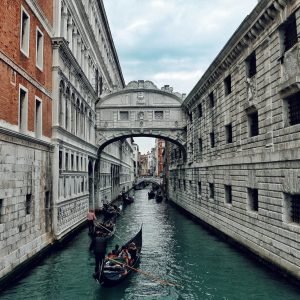
St. Mark's Basilica is known as the "Golden Church," and when you step inside and see the golden mosaics covering every inch of the ceiling, you understand why: over 8,000 square meters of Byzantine mosaics that have been glimmering in the dark for nearly a thousand years. Next door, the Doge's Palace was for centuries the seat of power of the Republic of Venice: its gilded halls, its prisons, the infamous Bridge of Sighs that condemned prisoners crossed on their way to their cells.
- Skip-the-line access to St. Mark's Basilica
- Doge's Palace and the Bridge of Sighs
- Guide specialized in the history of the Most Serene Republic
- Piazza San Marco and its historic 18th-century cafés
Gondola ride through the canals
Some things can't be rationally justified and yet must be done. The gondola ride is one of them. It's not the most efficient way to get around Venice, but it's the only way to see the city as it was meant to be seen: from the water, in silence, at eye level with the palaces, passing through narrow canals where the architecture surrounds you on every side. A Venetian gondolier who knows every bend of the water, the sound of the oar, the light reflecting off the façades.
- Private or shared gondola with a Venetian gondolier
- Ride through the city's most photogenic canals
- Option for a musical serenade on board
- Evening timing for sunset light
Murano and Burano: the islands of the lagoon
Murano has been making blown glass for 1,200 years. In the 13th century, the Republic of Venice moved all glassmakers to this island to protect the secret of their technique — and so their furnaces wouldn't burn the city down. Today you can step into a workshop and watch a master glassmaker turn a ball of molten glass into a work of art in under three minutes. Then, Burano: the island of lace and houses painted in impossible colors, where every façade is a different palette and the canals look like a Canaletto painting.
- Private boat from Venice to the islands
- Glassblowing demonstration in a century-old Murano workshop
- Burano: the colorful houses and the lace-making tradition
- Free time to explore and have lunch on the islands
Hidden Venice: Cannaregio and the Ghetto
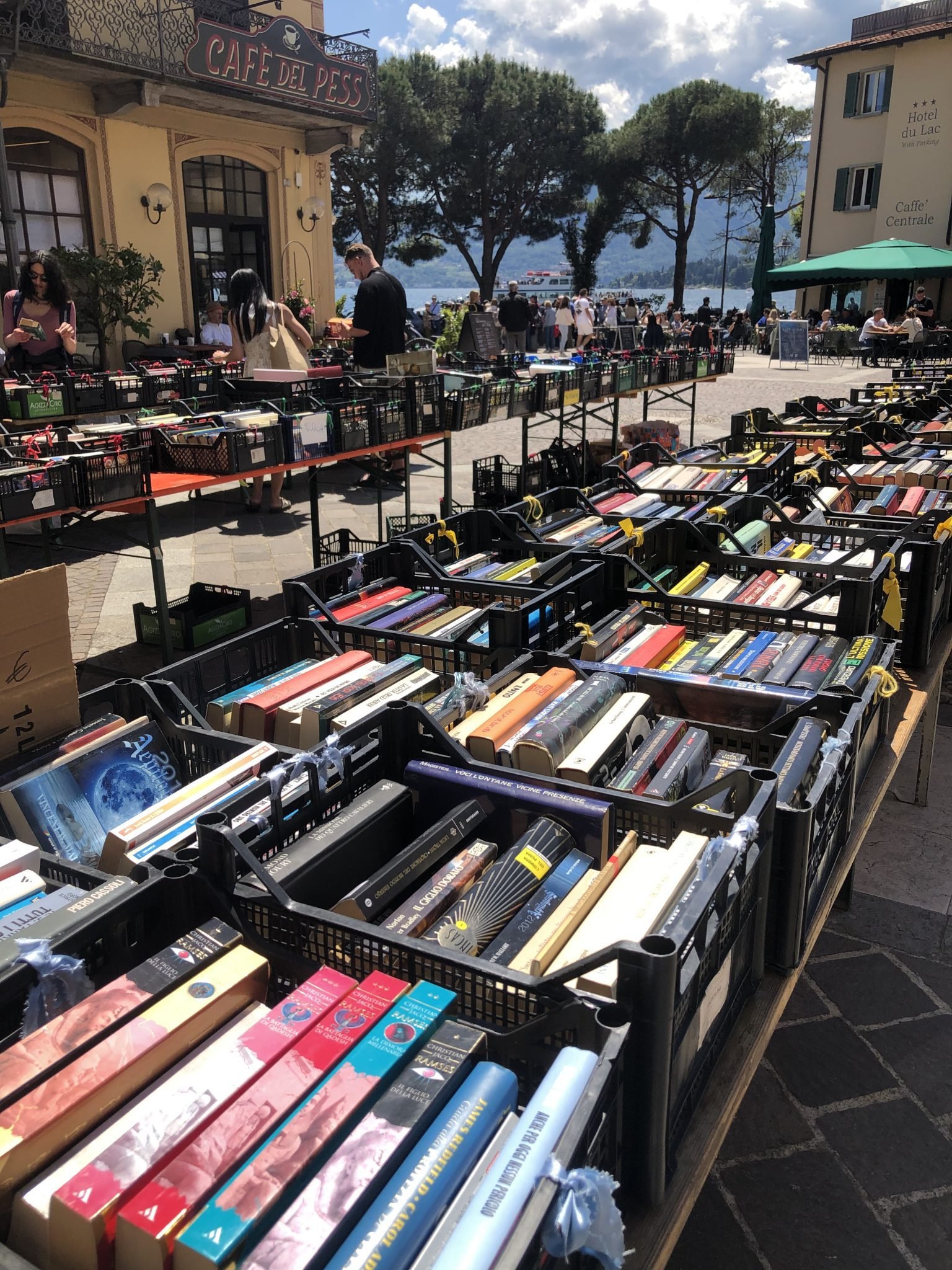
There's a Venice most tourists never see because they never stray far from San Marco. Cannaregio is the neighborhood where real Venetians live, where bars serve cicchetti for two euros standing at the counter, and where you'll find the world's oldest Jewish Ghetto, founded in 1516.
- Cannaregio neighborhood: authentic, everyday Venice
- The Jewish Ghetto: history and culture of Venice's Jewish community
- Cicchetti and wine tasting at a traditional bacaro
- Rialto Bridge and the fish market at dawn
Vivaldi's Four Seasons concert
Antonio Vivaldi was born in Venice in 1678 and composed The Four Seasons here. Hearing that music in the church of the Pietà — where Vivaldi himself served as choirmaster — is an experience that goes far beyond the concert itself: the 18th-century acoustics, musicians in period costume, candlelight.
- Concert at the church of the Pietà, Vivaldi's temple
- The Four Seasons performed by musicians in period costume
- Reserved seating with a prime view of the stage
- Venice at night: the city at its most beautiful after dark
Florence
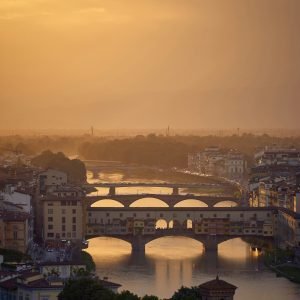
To get to this wonderful city I took a train from Venezia Santa Lucia station to Firenze Santa Maria Novella; the ride takes about 2 hours 30 minutes. I stayed just 4 blocks from the station, at Hostel Archi Rossi: comfortable, with free coffee and a very homey vibe.
This city has the charm of love at first sight, with its narrow streets, its classic bars and the central market with street stalls selling leather goods. But when the Duomo appears in all its grandeur, with its dome designed by Filippo Brunelleschi, you feel like you're inside a movie. If you can book a guided tour of the Duomo, you'll get in faster and understand the place better — the austere interior looks nothing like the façade.
My first tour, as you already know I love, was the walking city tour. That's where I learned Brunelleschi wasn't originally an architect but a goldsmith: he lost the competition to design the Baptistery's doors, but won the one for the cathedral's dome with architecture so innovative for its time that he himself had to supervise the work day by day. With that, he became the founder of Renaissance architecture.
Walking around the city you'll find outdoor sculptures: a replica of Michelangelo's David in front of the Palazzo Vecchio, and Perseus with the Head of Medusa in the Loggia della Signoria (free entry, with closing hours).
At sunset, I went up early to Piazzale Michelangelo to grab a spot on the steps: the city views with live music in the background are worth the walk.
The day I enjoyed the most of the whole trip: Tuscany
For a full day, I booked the Siena, San Gimignano and Pisa tour with lunch and wine tasting through the agency Ciao Florence, and without a doubt it was my favorite experience of the whole trip. We left early for rural Tuscany: green hills dotted with cypress trees, endless vineyards and that particular light that makes everything look hand-painted.
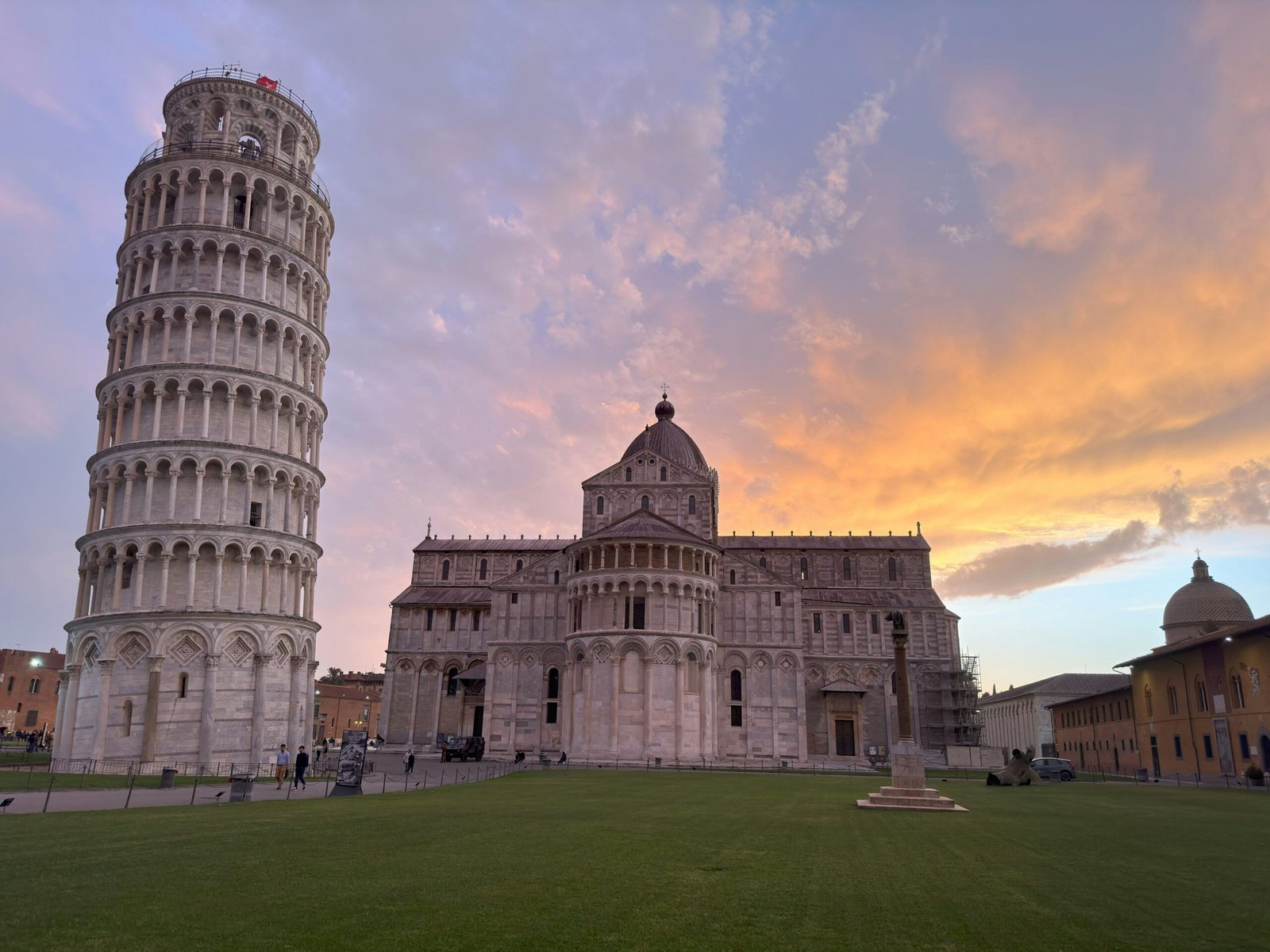
In Siena we walked through Piazza del Campo, considered the most beautiful medieval square in Europe, with its black-and-white marble Duomo. San Gimignano, with its medieval towers competing in height, looks like a small 14th-century Manhattan — that's where we tried one of the best gelatos in all of Italy. Before lunch, wine tasting at a family-run winery in the region: Chianti served alongside local cheeses and cured meats, with views of the vineyards. Pisa was the last stop, with its leaning tower and the full Piazza dei Miracoli.
It was one of those days that makes the whole trip worth it. If you only have to pick one excursion from Florence, make it this one.
Must-see museums · Florence
- Uffizi GalleryBotticelli's "The Birth of Venus" and "Primavera," Caravaggio's "Medusa"
- Accademia GalleryMichelangelo's "David," up close and without rushing
Practical info · Florence
- Getting thereTrain to Firenze Santa Maria Novella, very central
- Recommended number of days3 days, plus a Tuscany excursion
- Best time to travelApril–June or September–October
- Must-seesDuomo + Brunelleschi's dome, the Uffizi, Piazzale Michelangelo at sunset
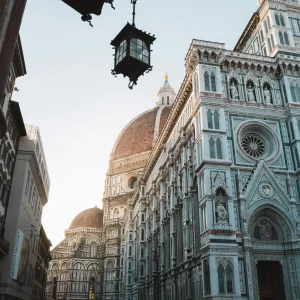
Experience Florence beyond what any photo can show
Florence is the city that gave the world the Renaissance, and to this day its streets, churches and galleries hold the most astonishing concentration of art on the planet. But visiting Florence without a guide who can open the right doors means missing out on the best of it. Every excursion is designed so you walk in where others wait outside, see what others overlook, and leave with stories to tell.
Uffizi Gallery and Accademia Gallery, skip the line
The Uffizi Gallery is one of the most important museums in the world and also one of the most in-demand: without a reservation, the wait can be over three hours. With this excursion you go straight in. Your Spanish-speaking guide takes you through the rooms where Botticelli painted "The Birth of Venus." Then, the Accademia Gallery to stand face to face with Michelangelo's David.
- Priority, no-wait access to both galleries
- Spanish-speaking expert guide in Renaissance art
- Michelangelo's David and the original Botticellis
- Small groups for a better experience
Brunelleschi's Dome and the Baptistery
For 140 years no one knew how to build the dome Florence needed. Then Brunelleschi came along and invented a technique that changed architecture forever. Climbing the 463 spiral steps to the top of Santa Maria del Fiore isn't just a physical feat: it's understanding from the inside how one of humanity's boldest works was built. From up top, all of Florence unfolds at your feet.
- Reserved access to the Renaissance's most iconic dome
- Panoramic views of the whole city from the top
- Visit to the Baptistery and its Gates of Paradise
- Guide trained in art history
Siena, San Gimignano and Chianti
You leave Florence and in under an hour you're in another world. Siena, with its Piazza del Campo, is considered the most beautiful medieval square in Europe. San Gimignano, with its family towers, looks like a medieval Manhattan. And Chianti has to be experienced with a glass in hand.
- Siena: Piazza del Campo and the Gothic Duomo
- San Gimignano and its medieval towers
- Chianti wine tasting at a local winery
- Tuscan lunch included on most departures
Cinque Terre from Florence
Five colorful villages clinging to cliffs above the sea, connected by trails with views that look unreal. The train between villages, free time to swim, eat focaccia facing the Mediterranean and wander the alleyways of Vernazza or Monterosso.
- The five villages: Riomaggiore, Manarola, Corniglia, Vernazza and Monterosso
- Bilingual guide throughout the tour
- Train pass between villages included
- Free time to swim or explore at your own pace
Pisa and Lucca in one day
The Leaning Tower of Pisa is much more than the classic photo. But the surprise of the day is Lucca, the walled city tourists haven't discovered en masse yet: its Renaissance walls today function as a tree-lined walkway above the rooftops.
- Pisa's Campo dei Miracoli with a specialized guide
- Lucca and its Renaissance walls, optional bike ride
- Local markets and authentic food
- Return to Florence at sunset
Rome
It's a vibrant, bustling city. Just remembering my stay there, the longing I feel for this beautiful place hits me straight in the soul. The day I arrived at Termini station, I knew this would be a part of the trip that would mark me for life.
Following in the footsteps of Roman Holiday
My favorite movie is Roman Holiday, starring Gregory Peck and Audrey Hepburn, so I built a good part of my itinerary around the places they visit. The Mouth of Truth (Bocca della Verità), in the portico of the church of Santa Maria in Cosmedin, is famous for the scene where Joe pranks Princess Ann by putting his hand inside and pretending it gets bitten off. The Spanish Steps (Piazza di Spagna), where the princess sits eating gelato on the steps, is still one of the most photographed spots in the city. Castel Sant'Angelo, at whose base the film's floating party on the Tiber takes place, also has one of the best views of Rome from its terrace. And the Palazzo Colonna, whose gallery served as the setting for the royal palace hall where the final press conference is filmed, is only open certain days of the week — worth checking the schedule before going.
The Colosseum, the Forum and the Palatine
First on the must-see list: the Colosseum.
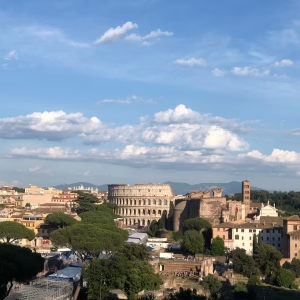
To get in, I bought my ticket a month in advance through the official website. You have to be up before dawn (Argentina time) to snag the best slots, like the Gladiator's Arena visit, which sells out instantly. I only managed to get tickets for the Colosseum, Forum and Palatine, which at the time was cheaper to book directly on the website. You can also book with a guide, which makes the tour much richer.
I did the visit on my own, early in the morning. The Palatine Forum is enormous — I recommend comfortable shoes and plenty of water. That day I got sunstroke from wanting to see absolutely everything without skipping a thing.
After that long walk under the sun, I took the metro downtown and found a quiet bar with good music. I ordered something to recharge and they gave me a complimentary Prosecco: a sparkling white wine, fresh and fruity, perfect for cooling down the Roman heat.
Wandering Rome without a map
Rome isn't a city you understand in a day, but if you arrive with some context, every corner starts to speak for itself. I walked without a map for hours, and something new appeared on every corner: a Baroque fountain that in any other city would be the main monument, a 16th-century church with the door open and no one inside, a little square where Romans had their aperitivo as if time didn't exist.
The Trevi Fountain: by day and by night
I visited the Trevi Fountain by day and by night, and they're nothing alike. With light rising up from the water, the sculptures take on a completely different dimension after dark. I threw three coins — one to return to Italy, another to fall in love with an Italian, and the third to get married there — knowing full well it's a cliché. And I'd do it again.
Trastevere: authentic Rome
What surprised me most was Trastevere. I went in looking for dinner and ended up walking around for two hours. It's the only neighborhood in Rome where you feel Romans still truly live: laundry hanging between buildings, cats sleeping on the steps, trattorias with the day's menu handwritten on a chalkboard. No English menu, no photos on the menu — a sure sign the food is going to be good.
The pizza fascinated me, and the Carbonara was one of my favorites of the whole trip.
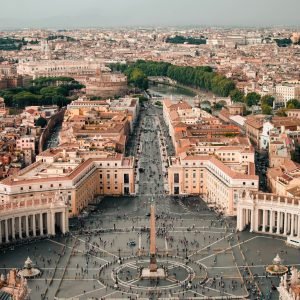
The Vatican and the Holy Door
For the Vatican, book months in advance, especially if you want early entry to the Vatican Museums. The difference between entering with a reservation and waiting in line on the day can be three hours.
In my case, I traveled during the Jubilee and entered alongside the pilgrims through a special section, reciting the Our Father and carrying the cross. Passing through the Holy Door left me with an inexplicable sense of harmony. It was the most powerful thing I experienced on the whole trip — a spiritual, inner shift that stayed with me for the rest of my days in Italy.
Practical info · Rome
- Getting thereTrain to Roma Termini, or flight to Fiumicino/Ciampino
- Recommended number of days4 to 5 days — it's the city with the most to see on the itinerary
- Best time to travelSpring or fall, avoiding August's extreme heat
- Must-seesColosseum + Roman Forum, Vatican Museums, Trevi Fountain at night, Trastevere
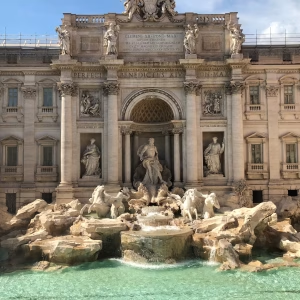
Rome: where every stone holds two thousand years of history
You don't just visit Rome. You live it. It's the only city in the world where you can have breakfast by an 18th-century fountain, lunch steps from the Roman Forum, and end the day in a Baroque neighborhood that looks untouched since the 1600s. The Eternal City holds so much history that no single trip is enough to see it all, but with the right guide and the right access, every hour you spend there will be worth ten.
Colosseum, Roman Forum and Palatine
The Colosseum is one of those places where the photo never does justice to reality. Standing on the arena floor where 50,000 Romans once sat to watch the games, walking through the underground corridors where gladiators waited, is an experience that stays with you. Then, the Roman Forum and the Palatine.
- Skip-the-line access to the Colosseum, Forum and Palatine
- Option to access the arena floor and the underground hypogea
- Archaeologist guide specialized in Roman history
- Full historical context: Republic, Empire and fall
Vatican Museums and Sistine Chapel
The Vatican Museums have 54 galleries and 20,000 works of art. With our excursion, you go straight in, skip lines that can run over two hours, and your guide curates what's worth stopping for so you arrive at the Sistine Chapel prepared.
- Priority entry with guaranteed advance booking
- Tour of the Raphael Rooms and the Papal Galleries
- Sistine Chapel with a detailed explanation of Michelangelo's ceiling
- Visit to St. Peter's Basilica included
Classic Rome on foot: Trastevere and Piazza Navona
Trastevere is the neighborhood where Rome truly lives. From there, you cross the river toward the historic center and reach Piazza Navona, where Bernini left his most monumental fountain. This walking excursion is Rome with no filters.
- Trastevere: Rome's most authentic neighborhood
- Piazza Navona and Bernini's Fountain of the Four Rivers
- Campo de' Fiori and its morning market
- Artisanal gelato tasting at a historic gelateria
Trevi Fountain and the Pantheon
Rome at night is a completely different city. The Trevi Fountain at night is one of those sights you never forget. The Pantheon, with its oculus open to the night sky. A Rome most tourists never get to see.
- Trevi Fountain without the daytime crowds
- The Pantheon by night and its 1,900-year-old dome
- Piazza della Rotonda and its historic cafés
- Roman aperitivo included along the way
Excursion to Orvieto and Civita di Bagnoregio
Civita di Bagnoregio is known as "the dying town." You reach it via a vertigo-inducing pedestrian bridge. Orvieto, just a few kilometers away, has a 14th-century cathedral with a mosaic façade that's one of the most beautiful in Italy.
- Civita di Bagnoregio: Italy's most unique town
- Orvieto Cathedral and its Last Judgment frescoes
- Orvieto wines with designation of origin
- Umbrian landscapes without mass tourism
Salerno, Amalfi, Positano
After this leg of the trip I was ready to head off to my next adventure, the Amalfi Coast. If we're talking movie-like, unreal scenery, these destinations fit the bill perfectly. I left early in the morning from Termini station toward Salerno on the Intercity train, which took longer but was the cheapest option.
I used the train ride to relax, read and enjoy the scenery. Salerno has an elegant-city vibe, with lots of boutique shops — it's not the cheapest destination in the area, but it has its charm. I dropped my things at a well-located Airbnb I had booked.
I went out for a walk, found a great spot for an Aperol Spritz, and discovered a little bar near a square, perfect for slipping into "last days at the beach" mode.
I ended up meeting some Dutch siblings at the bar, and we went bar-hopping to a few well-rated spots on Trip Advisor before heading to dinner. It was one of the most fun nights of the trip — we even ended up at a club to see what Italian nightlife was like.
How to get to Amalfi
The next day I got up early to make it to Amalfi. You need to take the Sita Sud bus line; it's best to board it from Salerno's station, since if you try boarding at other stops it likely won't even stop — everyone gets on at the station and it fills up fast. I went in early June and that's exactly what happened to me.
Tickets are bought at tabaccherias, as they call them there, and cost about 2 euros per leg — cheaper than the ferry, though the ferry is more direct and faster. That said, the bus winds through very tight curves on narrow streets — if you like a bit of adrenaline, it's part of the experience.
As the route goes on, and if you're paying attention to the view out the window, you'll pass through Vietri sul Mare, Cetara, Maiori, Minori, Amalfi and Positano — each stop better than the last.
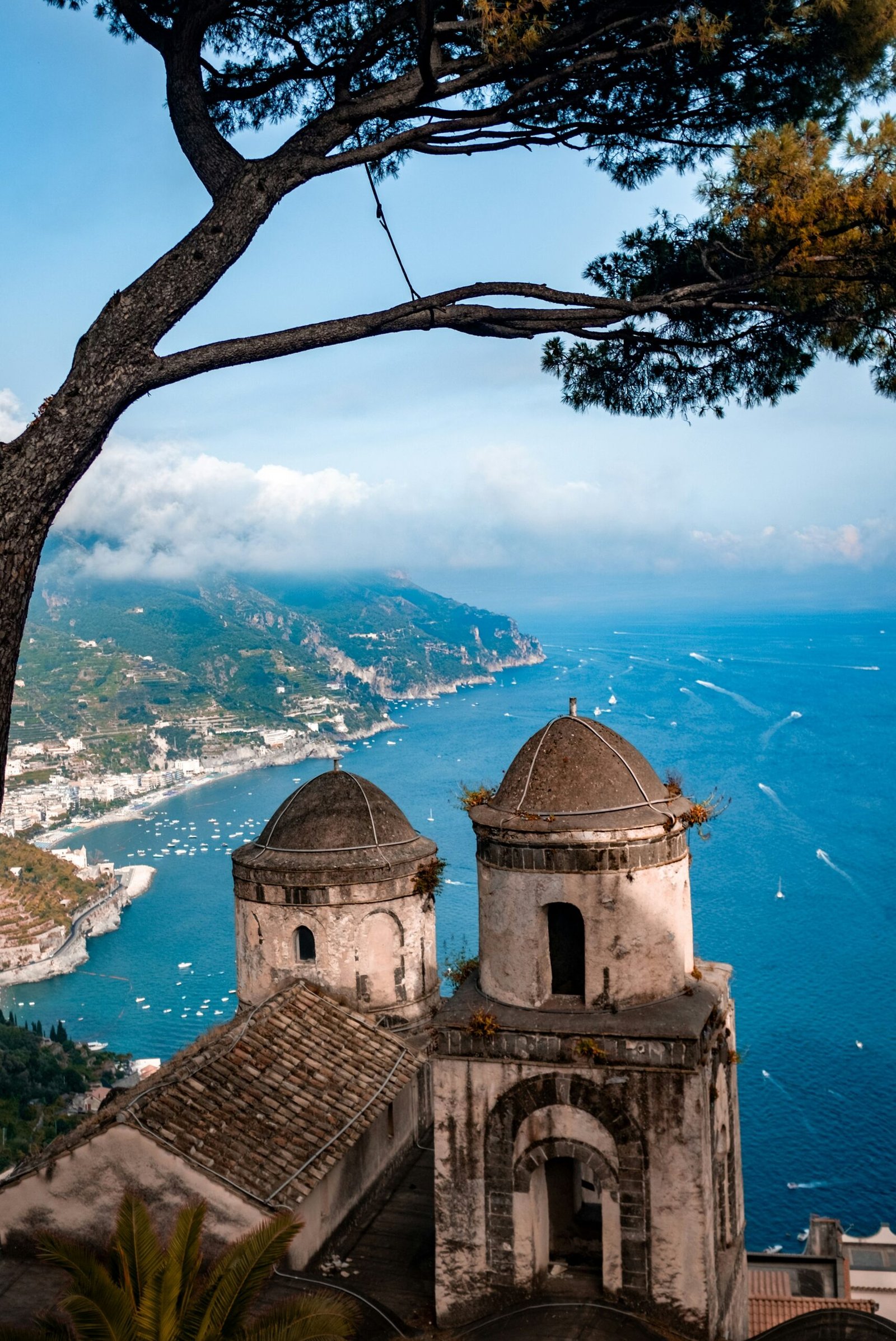
If you want to visit Ravello, get off a bit before Amalfi and catch another bus: not all buses leaving the terminal go there, and the system is quite confusing if you don't speak the language. If the bus leaves full (which happens often in high season), the simplest alternative is to take the ferry back to wherever you're staying.
Amalfi and its lemons
Amalfi has its Cathedral of St. Andrew the Apostle on the Piazza del Duomo, very close to the bus terminal. Climbing the stairs and seeing the magnificence of its architecture is moving: it's Neo-Romanesque, with strong Neo-Gothic and Arab-Norman influences, and dates from the 19th century. The interior is just as beautiful, with carved, gilded details, large canvases depicting religious scenes, and painted wooden ceilings that make it impossible not to look up.
Walking out through Amalfi's little streets, you'll see stalls selling lemons cut in half and filled with lemon gelato, and entire shops dedicated to this citrus fruit — from liqueurs to perfumes — which is the absolute star of this region.
Positano, the postcard you already knew
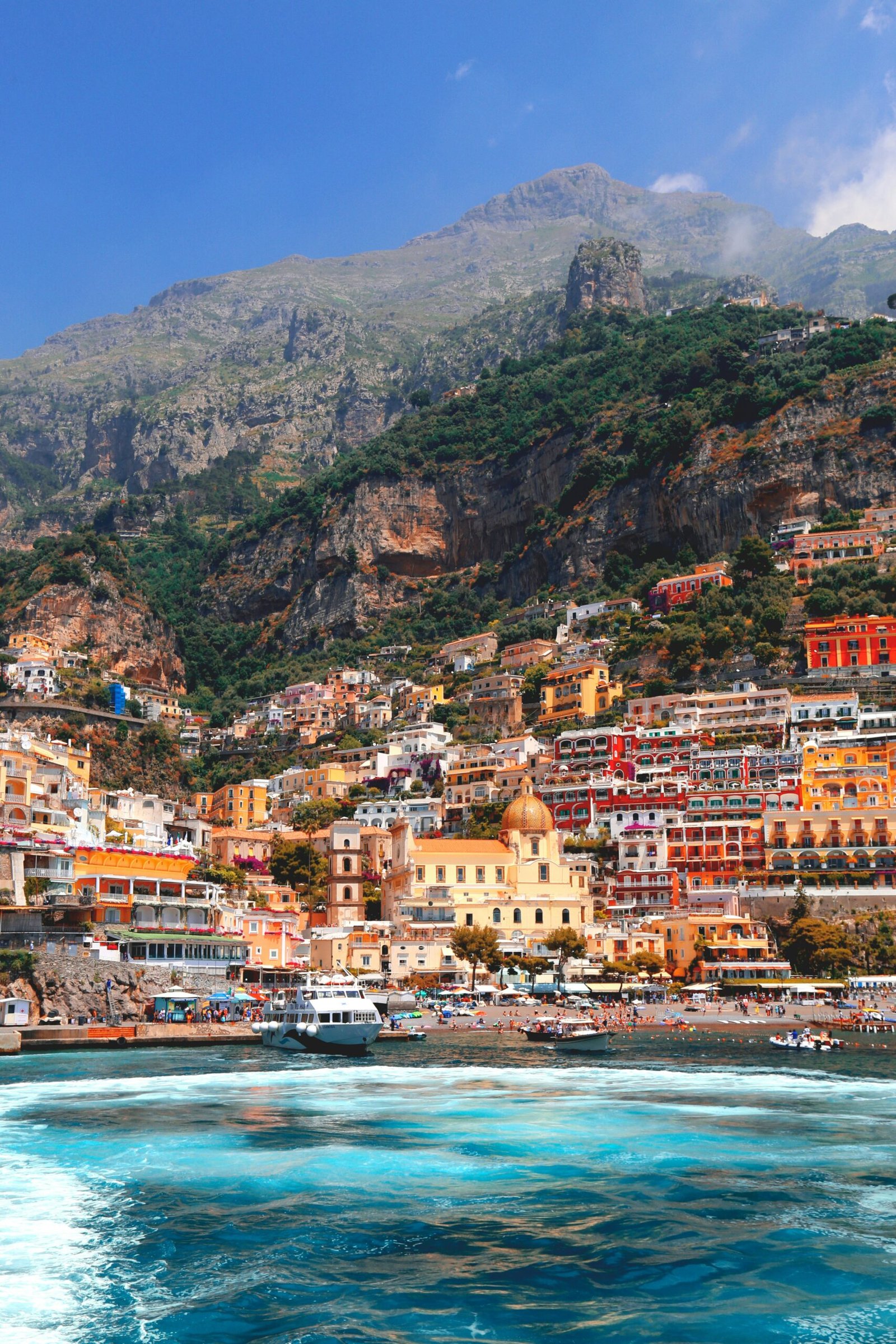
The fastest and most efficient way to get to Positano is by ferry: companies like Travelmar and Positano Jet are the most common for this direct route.
Positano is exactly like the photos and videos: steep streets full of stairs, perfect for admiring the immense beauty of the landscape and the colorful, terraced architecture from above. I arrived, ate something facing the sea, and took a long while just to look.
The beach, I have to warn you, is pebbly, like almost the entire Amalfi Coast, but it's still fine for a couple of dips. Afterward you can lie back to sunbathe and listen to Italian music while enjoying a tiramisu… a 100% recommendable plan.
Sorrento and Pompeii, if you have a spare day
If you have time, it's worth adding an excursion to Sorrento, although it's quite far from both Amalfi and Positano. Plan the boat schedules carefully: if you miss the last return, the only way back is by connecting trains, a much longer and more uncomfortable trip if you get the timing wrong.
And one stop I don't want to forget to recommend is Pompeii, the Roman city buried under volcanic ash after the eruption of Vesuvius in 79 AD. Walking through its almost perfectly preserved streets, houses and shops is one of those experiences that changes how you understand history — nothing you read beforehand prepares you for seeing it with your own eyes. It's visited on a half-day excursion from Salerno or Naples, and I recommend going with a guide to fully understand the context of what you're seeing.
This is a trip you won't regret taking — you'll come away with countless experiences and lifelong memories from a country rich in good food, warm people, unforgettable places, and who knows, maybe you'll even find love.
Practical info · Amalfi Coast
- Getting thereTrain to Salerno, then Sita Sud bus or ferry to each town
- Recommended number of days3 to 4 days for Amalfi, Positano, Ravello and a side trip to Capri
- Best time to travelMay–June or September; avoid August, very crowded with tourists
- Must-seesPositano, Amalfi, Ravello, and if time allows, the island of Capri
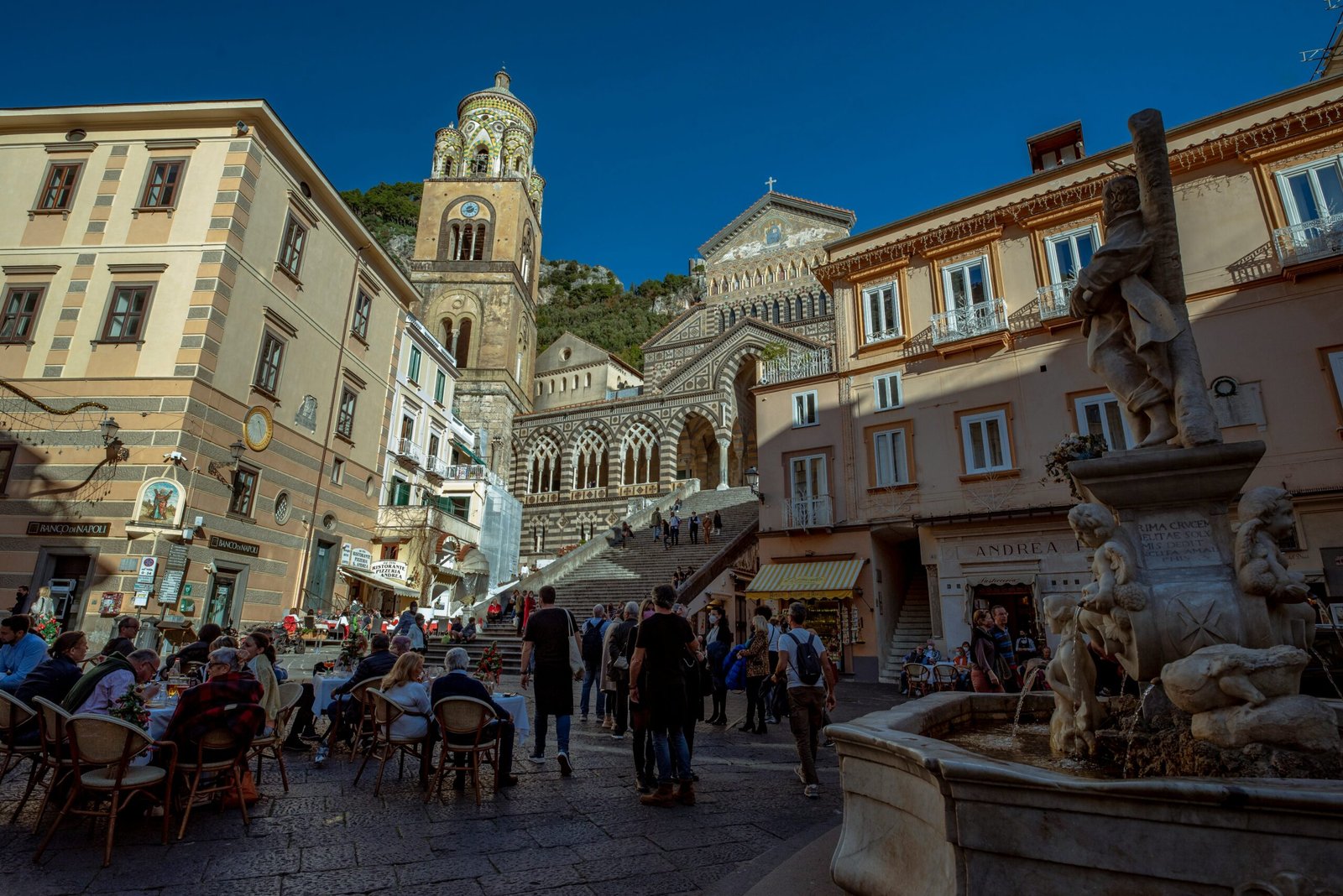
The Amalfi Coast: southern Italy in its purest form
There are places in the world that exceed every expectation. The Amalfi Coast is one of them. Vertigo-inducing cliffs dropping straight into the Mediterranean, colorful villages that defy gravity, the scent of lemon in the air, and a sea so blue it looks painted. A UNESCO World Heritage Site since 1997, this stretch of coast is also the gateway to Naples, Pompeii and Capri. Here, every excursion is a moving painting.
Positano, Amalfi and Ravello by boat
Seeing the coast from the sea is seeing it the way it deserves. Positano with its colorful houses cascading down to the water, Amalfi with its Arab-Norman cathedral, and Ravello, perched high up with gardens gazing at the horizon and a villa where Wagner composed part of Parsifal.
- Private cruise along the coast's most spectacular stretch
- Stops in Positano, Amalfi and Ravello
- Option to swim in exclusive-access coves
- Spanish-speaking guide throughout the tour
Isle of Capri and the Blue Grotto
Capri is the island Roman emperors chose to live on. The Blue Grotto is a natural phenomenon that leaves you speechless: a sea cave where sunlight filtering through the water turns it a phosphorescent blue. On land, the Faraglioni — the most iconic postcard image of the Mediterranean.
- Boat crossing from the Amalfi Coast
- Entry into the Blue Grotto by traditional rowboat
- Free time in Capri and the Piazzetta
- Views of the Faraglioni and the Gardens of Augustus
Pompeii and Herculaneum
In 79 AD, Vesuvius buried two Roman cities under meters of ash. Walking through Pompeii with an expert guide feels like traveling through time. Herculaneum, less visited and better preserved, shows original 1st-century mosaics and woodwork.
- Pompeii with a specialized archaeologist guide
- Herculaneum: the most complete, least touristy city
- Access to special areas not open to the general public
- Historical context of Vesuvius and the Roman world
Culinary Naples and Spaccanapoli
Naples is loud, intense, chaotic and absolutely fascinating. It's the city that invented pizza margherita and espresso as a daily ritual. Spaccanapoli is the street that literally splits the city in two.
- Tour through Spaccanapoli and the historic center
- Pizza at a century-old Neapolitan pizzeria
- Tasting of coffee, sfogliatelle and local sweets
- Visit to the Sansevero Chapel and the Veiled Christ
What I learned traveling 25 days through Italy
Best time to travel
May and June are ideal: perfect weather, without August's extreme heat, and fewer tourists than in peak season. Avoid August if you can, especially on the Amalfi Coast.
Trains
Use the Omio app to plan your connections. Intercity trains are slower but much cheaper than the Frecciarossa. For the Amalfi Coast, take the train to Salerno and then the Sita Sud bus (buy the ticket at a tabaccheria, 2€ per leg).
Essential advance bookings
The Colosseum (especially the gladiator arena), Da Vinci's Last Supper in Milan (months ahead), the Vatican Museums and the Uffizi Gallery. Always buy through the official website — it's cheaper and avoids middlemen.
Luggage
If you're changing cities often like I did, travel with just a backpack and carry-on. Italian trains have limited space, and on the Amalfi Coast you'll be constantly climbing up and down stairs.
Food and tipping
Italians eat dinner late, but not as late as you'd think: starting around 8pm. After 9pm many places have already closed the kitchen. Tipping isn't mandatory but is appreciated. Avoid restaurants with photos on the menu and multi-language menus right next to the monuments.
Budget
Exchange euros before leaving Argentina — currency exchanges at Italian airports charge high fees. Bring some cash for buses, markets and small businesses that don't take cards.
Italy in 25 days
Complete guide with excursions, updated prices and firsthand tips. We'll send it to your email instantly.
No spam · Unsubscribe anytime
All set! Check your email
We've sent you the complete 25-day Italy itinerary. If it doesn't show up in a few minutes, check your spam folder.
View the itinerary now →If you want to keep planning your trip through Europe, I also recommend these guides:
Photo credits
- Julia Solonina · Unsplash
- Lorenzo Gerosa · Unsplash
- Al Elmes · Unsplash
- Damir Samatkulov · Unsplash
- Ouael Ben Salah · Unsplash
- Mathieu Gauzy · Unsplash
- Nikol Shtereva · Unsplash
- Maria Sevruk · Unsplash
- Jesper Brouwers · Unsplash
- Chris Boland · Unsplash
- Huy Phan · Unsplash
- Bjørn Agerbeek · Unsplash
- Davide Aracri · Unsplash
Did you find this article helpful?
Share this with that friend who always dreams of visiting this destination.
Do you have any more tips for this destination? Leave us a comment with your travel story.
Share this article!
Help other travelers by sharing this information
Thanks for sharing